More businesses now hire web teams in another city or country, for access to skills, better value or simply the right fit. Done well, it works just as smoothly as hiring locally. We work remotely with clients across Nigeria, North America and Europe, so these are the questions we’d want answered if we were in your position.
Why hire a remote web team?
- Wider choice. You can choose the team with the right skills and experience for your project, not just the nearest one.
- Value. Rates vary between countries, so you may get more for your budget.
- Coverage. A team in a different time zone can work while you sleep, which can speed up some projects.
The trade-offs are real but manageable: less face-to-face contact, time-zone differences and different legal systems. Good agencies plan for all three.
What to check before you sign
1. Work you can see and verify
Ask for three to five live websites, ideally in your industry or of a similar size. Visit them on your phone. Check that they load quickly, read clearly and work properly. If case studies mention results, ask how they were measured.
2. References you can speak to
Testimonials on a website are a start. Ask to speak to one or two past clients, and check independent review sites and the agency’s Google Business Profile.
3. A clear process and named people
Ask how a project runs from start to finish: discovery, design, build, testing and launch. Find out who your main contact will be, who does the design and development, and how decisions get made. A clear answer is a good sign; a vague one usually isn’t.
4. Communication and time zones
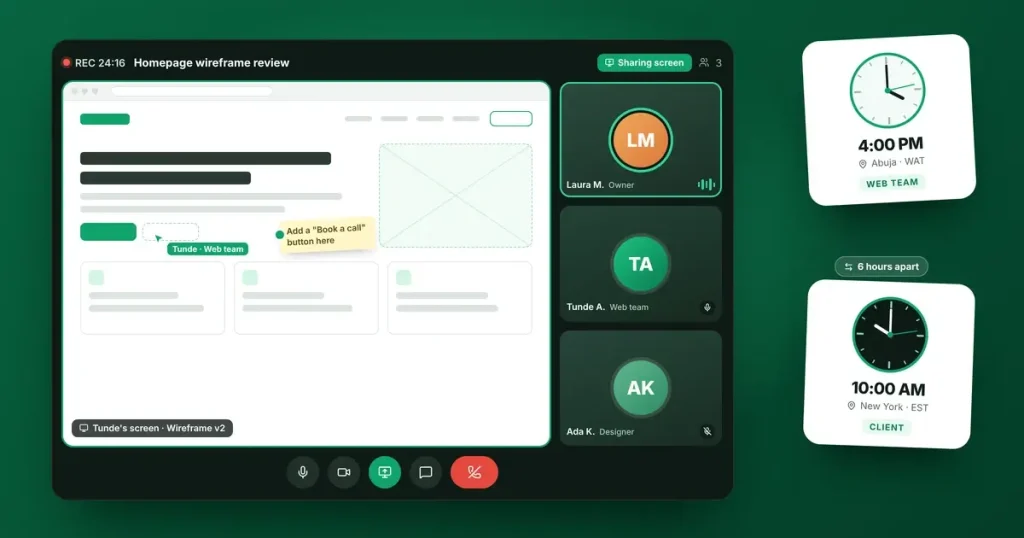
Agree how you’ll communicate (email, video calls, a project tool or messaging), how often you’ll get updates, and how quickly they’ll reply. Check the overlap in working hours. For example, West Africa Time is one hour ahead of the UK in winter and level with it in summer, and five to six hours ahead of US Eastern Time, which still leaves several shared working hours each day.
5. Ownership of everything
This is the most important check. In writing, confirm that:
- Your domain name is registered in your name or your company’s name.
- You have admin access to the website, hosting and any connected tools.
- You own the design, code and content once you’ve paid for them.
- Analytics, Search Console and business profiles are set up under your accounts, with the agency added as a user.
If you ever change suppliers, these four points decide whether you can simply move on or have to start again.
6. A written scope and contract
The scope should list the pages, features, number of design revisions, who supplies the content, the timeline and what’s not included. The contract should cover ownership, confidentiality, how changes are priced, what happens if either side wants to end the project, and which country’s law applies. For larger projects, ask a lawyer to review it.
7. Payments tied to milestones
A common structure is a deposit to start, then payments at agreed milestones such as design approval and launch. Confirm the currency, how you’ll pay, and who covers transfer fees. Be cautious of anyone asking for the full amount before any work begins.
8. Security and data handling
Ask how they store passwords and access details, whether they use secure connections and backups, and how they’ll handle any customer data your site collects. If you serve customers in the UK or EU, make sure they understand GDPR.
9. Support after launch
Ask what happens after the site goes live: how long launch support lasts, how quickly they fix problems, and what an ongoing care plan includes and costs. The team that built your site is usually best placed to look after it.
Questions to ask on your first call
- Can we see three live sites you’ve built recently, and speak to one of those clients?
- Who exactly will work on our project, and who is our main contact?
- What’s your process, and how long does each stage take?
- How will we communicate, and during which hours?
- Will the domain, website and accounts be in our name?
- What’s included in the price, and what would cost extra?
- What happens after launch if something goes wrong?
Red flags
- They won’t show live work or put you in touch with past clients.
- The domain or hosting would be registered in their name.
- The quote is a single number with no list of what’s included.
- They promise guaranteed rankings or results.
- They want full payment upfront for a large project.
- Replies are slow or vague before you’ve even signed.
Frequently asked questions
Is it safe to hire a web developer in another country?
Yes, if you check their work and references, agree everything in writing, keep ownership of your domain and accounts, and pay in milestones. Those steps protect you wherever your supplier is based.
How do I protect myself when hiring a remote agency?
Make sure your domain, hosting and accounts are in your name, get a written scope and contract, and tie payments to clear milestones. Ask for admin access from the start.
Will time zones slow my project down?
Not if you agree regular update times and how quickly each side will reply. A few hours of overlap each day is usually enough, and different time zones can even speed up work that happens overnight.
How much does it cost to hire a web development agency?
It depends on the scope, the agency and where it’s based. Our guide to business website cost explains what drives the price and how to compare quotes fairly.
What should be included in a web development contract?
The scope of work, timeline, payment schedule, number of revisions, ownership of the work, confidentiality, how changes are handled, termination terms and the governing law. For larger projects, have a lawyer review it.
Working with us
We build websites for businesses locally and internationally, with fixed-price proposals, clear milestones and your ownership of everything we build. Learn about our website development services, including business websites, custom web development and website care. If you’re replacing an existing site, our website redesign checklist will help you protect your search traffic. When you’re ready, talk to our team.